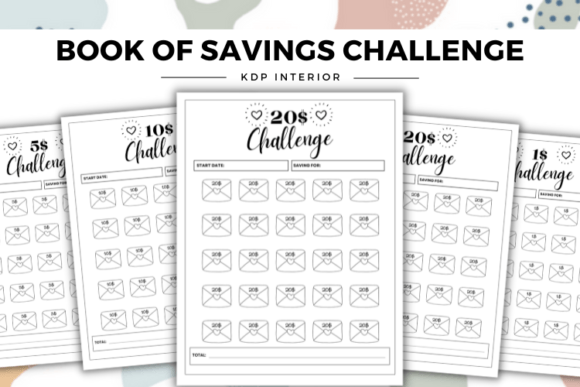
Your Savings Journey Starts Here: Mastering the Book of Savings Challenge Interior
Financial wellness isn’t about a secret formula or a complex investment strategy you can’t understand. Often, it starts with the simple, consistent act of saving. Yet, for many, the hardest part is building that habit, making it tangible and trackable. This is where a well-designed planner becomes a powerful ally. The Book of Savings Challenge Interior is precisely that: a structured, ready-to-use template designed to turn the abstract goal of "saving money" into a visual, daily, or weekly practice. It’s a tool for anyone—from a college student managing their first budget to a seasoned professional aiming for a specific financial milestone—who wants to move beyond intention and into action.
The Appeal and The Potential Pitfalls
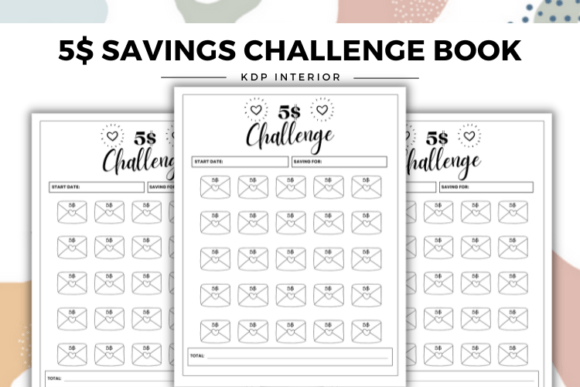
The concept is compelling. A downloadable, editable file provides 110 pages of dedicated tracking sheets, prompts, and challenges, formatted for the popular 8.5 × 11 size. It promises convenience and customization, saving you hours of designing your own sheets from scratch. But the very ease of access can lead to a common oversight: treating it as a generic download rather than a strategic tool. People often jump straight to printing or uploading without first evaluating if its structure aligns with their specific saving psychology and goals. This mismatch is the root of many abandoned savings plans.
Not All Savings Challenges Are The Same
A significant misunderstanding is viewing the Book of Savings Challenge Interior as a one-size-fits-all solution. The interior might contain various challenge formats—weekly savings grids, monthly tracking logs, or themed savings pots (like a "vacation fund" or "emergency buffer"). If you don’t review the interior pages before use, you might commit to a 52-week challenge that requires weekly deposits when your cash flow is monthly, leading to frustration and early dropout. The mistake here isn’t with the product, but with the application. The tool is flexible, but your strategy must inform its use.
The consequence is a loss of momentum and trust in your own financial discipline. You might blame the "planner" for not working, when the issue was a lack of personalization. A better approach is to treat the download as a workshop. Before you even print a page, open the PDF and scroll through all 110 pages. Identify the challenges that resonate. Perhaps a gradual "save $1, then $2" incremental challenge suits your start-small mentality, while a blank customizable tracker is better for your irregular freelance income. Selecting the right framework from the available options is the first real step toward success.
The Critical Details Before Upload or Print
For creators and entrepreneurs looking to use this interior for their own products, or for individuals readying it for personal print, several technical and practical details are frequently overlooked, affecting both quality and satisfaction.
Understanding "No Bleed" in a Real-World Context
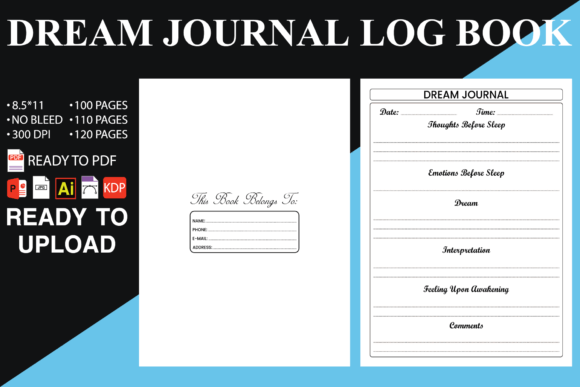
The file specifies No bleed. This is a crucial print design term. Bleed refers to artwork that extends beyond the trim edge of a page, ensuring no unwanted white borders after cutting. "No bleed" means all critical content is safely within the standard page margins. A common error is assuming a no-bleed file is less professional or harder to use. Actually, it simplifies home printing. However, the mistake occurs when you attempt to add your own decorative borders or color backgrounds that touch the edge of the PDF. If you edit the file and extend elements to the very edge, and then print at home, you might get inconsistent, cropped edges. The practical advice is to respect the existing margins during your edits. If you desire a full-color background, you now need to learn how to apply a bleed correctly, which this specific file is not pre-set for.
The 110 Pages: A Volume to Curate, Not Just Consume
Another overlooked detail is the volume—110 pages. It’s a benefit, offering a long-term saving companion. But the pitfall is trying to "use all pages" linearly. This can feel overwhelming and rigid. A more effective method is to see the book as a repository. You might use a 30-page tracking section for your main 2024 goal, then jump to a different challenge section in 2025. For KDP publishers, this volume is a selling point, but you should advise your customers on how to navigate it. Provide a brief guide or page index highlighting different challenge start points. This transforms a large file from a potential source of confusion into a value-packed, versatile resource.
From Download to Daily Practice: Avoiding the Execution Gap
Possessing a beautiful, ready-to-print PDF is one thing. Integrating it into your financial routine is another. A frequent gap occurs between downloading the Book of Savings Challenge Interior and establishing the habit of using it.
People often make the logistical mistake of printing the entire book at once on standard home paper, only to find it bulky and inconvenient to carry or reference daily. This affects usability and consistency. The better choice is strategic printing. Print a section at a time, perhaps a month’s worth of trackers, and keep it in a visible place—a desk, a kitchen counter, or a planner you use daily. For the digital-savvy user, consider not printing at all. Use the PDF on a tablet or laptop with a note-taking app that allows you to fill in the fields digitally during your weekly financial review. The tool should adapt to your life, not force you to adapt to it.
Editing with Purpose, Not Just Decoration
The file is advertised as editable, which is a great feature. However, many fall into the trap of over-editing for aesthetics before understanding functionality. They spend hours changing fonts and colors but neglect to tailor the actual saving targets and categories. This prioritizes form over function. First, edit the content: personalize the challenge titles, the savings goal amounts, and the reward milestones. Make these numbers realistic and motivational for you. Only then, if time permits, adjust the visuals. This ensures the core utility of the Book of Savings Challenge Interior remains intact, serving its primary purpose as a behavioral catalyst, not just a pretty document.
The Final Check Before You Begin
Before you finalize your download, upload to KDP, or hit print, pause for a final review. Ask yourself these practical questions: Does the challenge rhythm (weekly, monthly, incremental) match my income cycle? Have I verified the page size (8.5 × 11) is compatible with my printer or my intended print service? For publishers: have I added clear instructions on how to use the interior within my product description? For personal use: have I identified the first, manageable challenge to build confidence?
By approaching the Book of Savings Challenge Interior with this mindful, strategic perspective, you move from being a passive downloader to an active financial architect. You avoid the common pitfalls of mismatched formats, print technicalities, and habit integration failures. The tool becomes a true extension of your intent, transforming the admirable goal of saving money into a documented, achievable journey. Remember, the best planner isn’t the one with the most pages, but the one you actually use consistently. This interior provides the canvas; your thoughtful preparation and personalization provide the brushstrokes that lead to your financial masterpiece.