Mastering Your Inner World: A Guide to the Dream Journal Log Book
Our nightly dreams hold profound insights—from sparks of creative genius to unresolved anxieties, metaphors for our daily lives, and glimpses into our subconscious minds. Yet, without a structured system to capture them, these fleeting narratives dissolve upon waking, lost to the fog of morning. This is where the Dream Journal Log Book enters your personal toolkit. It is not merely a blank notebook but a purpose-built framework designed to transform ephemeral dream experiences into a tangible, analyzable record.
Where does this tool fit in a broader process? It serves as the cornerstone of a deliberate practice of self-reflection and subconscious exploration. For professionals, creators, and anyone invested in personal growth, maintaining a dream journal is akin to conducting regular data analysis on your own psyche. The Dream Journal Log Book provides the consistent format necessary for this practice, ensuring that each entry is not just a hurried scribble but a detailed log with space for emotions, symbols, and later reflections. This consistency turns sporadic noting into a viable longitudinal study of your inner world.
Integrating the Dream Journal into Your Daily Routine
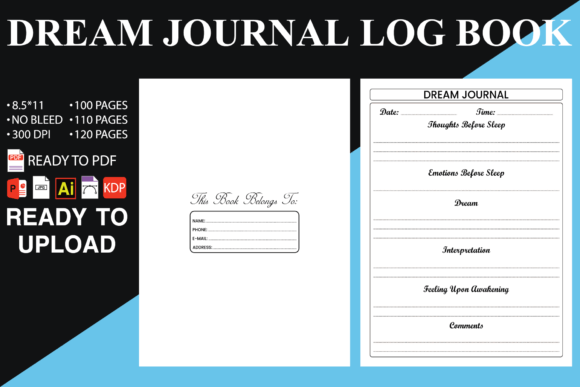
The key to effective dream journaling is seamless integration with your existing morning and evening rituals. The physical or printable design of the Dream Journal Log Book, with its clear headings and intuitive layout, minimizes friction. Place it, alongside a pen, in a predetermined spot—your bedside table, next to your morning coffee station—so it is the first thing you reach for upon waking. This preparation is critical; the seconds after awakening are precious for recall. The log book’s structured fields prompt you to record not just the plot, but the date, perceived emotions, notable characters or symbols, and even the quality of sleep, creating a comprehensive snapshot.
This practice interacts directly with other tools and methods. For those engaged in therapy or counseling, the journal becomes a rich source of material to discuss, providing concrete examples rather than vague feelings. For artists and writers, the dream log can feed directly into creative workflows, serving as a repository of bizarre imagery, unconventional storylines, and raw emotional states that can be adapted into projects. The journal acts as a bridge between the unconscious creative process and the conscious execution stage.
Practical Implementation and Long-Term Use
To maximize usability, approach your journal entries with a process-oriented mindset. Immediately upon waking, before you even sit up, begin mentally rehearsing the dream. Then, use the log book to capture the core narrative in the main entry section. Don’t worry about coherence or prose; focus on key scenes and transitions. Next, move to the prompted sections for emotions and symbols. This compartmentalized approach, facilitated by the log book’s design, helps in organizing chaotic dream material.
Consider setting a weekly review session. Flip through your past entries from the week, looking not for interpretation yet, but for patterns. Do certain symbols recur? Are there emotional themes? The Dream Journal Log Book, especially with versions offering 100, 110, or 120 pages, is built for this long-term review. The physical bulk of a completed journal becomes a valuable archive. Over months, you can observe shifts in your dream content correlated with life changes, stress levels, or new creative pursuits. This quality control—reviewing your own records—turns the practice from simple logging into genuine self-analysis.
Customization and Adaptation for Your Specific Needs
A significant feature of this particular Dream Journal Log Book offering is the provision of source files—PDF, PPTX, AI, and INDD—alongside the ready-to-use PDF. This speaks directly to creators, entrepreneurs, and educators who might want to adapt the tool. Perhaps you run a wellness workshop and want to provide a customized journal to participants. Using the source files, you can tweak the headings, add your logo, or modify the prompted sections to focus on specific aspects like lucid dreaming or nightmare management. The trim size of 8.5” x 11” and no-bleed specification ensure it remains printer-friendly for home use or professional printing.
This level of customization allows the log book to integrate into broader business workflows or educational curricula. A mental health professional could brand and adjust it for their clients. A life coach could incorporate it into a client’s accountability package. The high-quality, print-ready PDF ensures that even the standard version maintains a professional appearance, crucial for users who value aesthetics in their tools. The availability of different interior page counts (100, 110, 120) lets you choose a duration that suits your commitment level—a 100-page journal for a focused 3-month trial, or a 120-page version for a deeper year-long exploration.
From Recording to Insight: The Analytical Workflow
After establishing the habit of logging, the next phase involves working with the captured data. Here, the Dream Journal Log Book’s organization pays dividends. Create a simple index or tagging system in the margins as you review. You might code entries related to work stress, creative ideas, or recurring people. This manual organization, supported by the journal’s clear page layout, makes later retrieval efficient.
Engage with external resources. Your journal entries can be used alongside dream symbolism dictionaries, psychology texts, or even creative writing prompts. The log book becomes your primary data source, while these other resources become interpretive or development tools. For the productivity-minded user, this creates a satisfying closed loop: Capture (journaling), Organize (weekly review), Analyze (with external aids), and Apply (in creative work, problem-solving, or emotional understanding). The journal is the indispensable capture and organization node in this system.
Ensuring Consistency and Building a Valuable Archive
The greatest challenge in any journaling practice is consistency. The design of a dedicated Dream Journal Log Book, as opposed to a generic notebook, psychologically reinforces the specificity and importance of the task. Its presence on your nightstand is a visual commitment. Furthermore, the act of filling in the same structured fields each morning builds a ritual, which is far easier to maintain than starting with a blank page every day. This ritualization is a core principle of successful habit formation.
As you fill one journal and begin another, you build an archive. This long-term perspective is vital. Single dreams can be confusing or trivial, but patterns across a hundred pages reveal truths. This archive becomes a personal asset. For a writer, it might be a sourcebook for characters and plots. For an individual on a self-improvement path, it is a map of their psychological landscape, showing areas of tension and growth. The physical durability and print quality of the journal ensure this archive remains intact and usable for years, turning a simple daily practice into a legacy of self-knowledge.
Ultimately, the Dream Journal Log Book is more than a product; it is a system for engagement. It provides the structured starting point, reduces the friction of daily use, offers flexibility for customization to fit various professional and personal contexts, and supports the long-term analytical workflow needed to derive real value from your dreams. By integrating it smoothly into your morning routine and periodic review sessions, you transform nighttime whispers into a coherent dialogue with your deeper self, unlocking creativity, enhancing emotional clarity, and documenting the fascinating, unseen narrative that runs parallel to your waking life.