The Value of Double Maze Puzzles for Kids in Educational Play
In the crowded landscape of children's activity books and printable puzzles, a specific format has carved out a distinct niche: the Double Maze Puzzle for Kid. Unlike a standard single-path maze, this design presents two separate labyrinth challenges on the same page, often intertwined or presented side-by-side. This structure isn't merely a graphical choice; it represents a different approach to cognitive development and engagement. For parents, educators, and creators looking for effective resources, understanding what sets this format apart and how it compares to other puzzle options is key to selecting the right tool for a child's needs.
What Distinguishes the Double Maze Format?
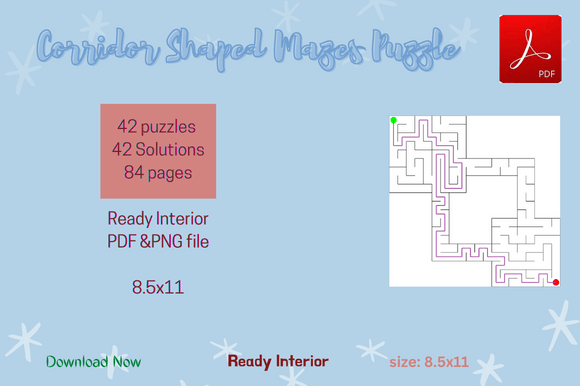
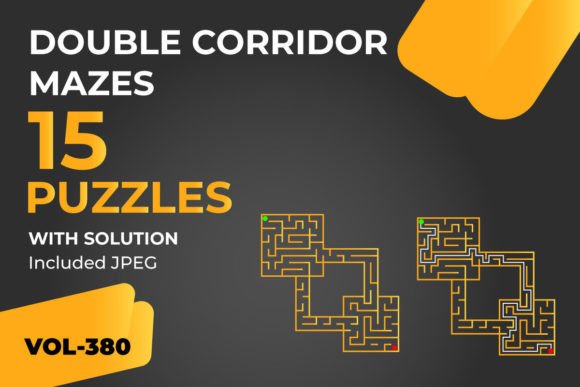
A classic maze puzzle focuses on a single journey from a start point to a goal. The Double Maze Puzzle for Kid fundamentally changes this dynamic. Typically, it features two independent mazes, sometimes with differing difficulty levels or thematic elements within the same visual space. This could mean two paths leading to two different destinations, or two separate puzzles sharing a border. The core distinction lies in the doubled cognitive load and the opportunity for comparative problem-solving.
From a child's perspective, this format introduces several unique benefits. It encourages task-switching and attention management—solving one maze, then shifting focus to the second without a completely fresh start. It can also foster a sense of accomplishment through multiple "mini-wins" on a single page. For siblings or peers working together, it naturally allows for a shared yet individual activity, reducing competition over a single puzzle. The design also often increases the density of activity per page, which is a practical consideration for printed materials.
Comparing Formats: Single Mazes, Activity Bundles, and Digital Options
When evaluating puzzle resources for children, the Double Maze Puzzle for Kid sits among several common alternatives. A straightforward comparison reveals distinct tradeoffs.
Traditional Single-Page Mazes
The ubiquitous single maze per page format, like those found in many printable packs or classic puzzle books, offers focused, linear engagement. Its strength is simplicity and deep concentration on one problem. For a younger child or one easily overwhelmed, this singular focus can be preferable. However, it may lead to quicker completion and less sustained engagement per sheet. In a practical setting like a long car ride or waiting room, a book with only single mazes might be consumed faster, requiring more pages or volumes.
The Double Maze design counterbalances this by effectively offering two activities in the physical space of one. In a resource like the Maze Puzzle 15 Puzzles with Solutions KDP Interior, which includes one maze per page with solutions, opting for a double maze variant would change the pacing and value per page. The decision here hinges on the desired intensity and the child's capacity for sustained, complex play.
Multi-Activity Page Bundles
Another popular alternative is pages that bundle a maze with other activities—a coloring section, a word search, or a spot-the-difference game. These are excellent for variety and catering to multiple interests. The double maze format chooses a different path: depth within a single type of challenge rather than variety across types. This makes it particularly strong for targeted skill development in spatial reasoning and logical sequencing. If the goal is to hone maze-solving skills specifically, a double maze page provides more practice of that particular cognitive muscle than a hybrid page where the maze is only a component.
Digital and App-Based Puzzle Games
The realm of digital mazes on tablets and phones offers animated feedback, unlimited levels, and interactive rewards. Printable puzzles, including the Double Maze Puzzle for Kid, occupy the opposite end of the spectrum. Their strengths are tangibility, portability without screens, and the development of fine motor skills through physical drawing of the path. The double maze format in print also encourages a pause between puzzles—the child lifts their pen after the first maze—which can be a moment of reflection absent in the fluid, endless progression of a digital game. For parents seeking screen-free activities or resources for specific offline scenarios (like classroom centers or travel kits), the printable double maze holds clear advantages.
Practical Considerations: Fit for Age, Skill, and Use Case
Determining whether a resource centered on Double Maze Puzzle for Kid is the right choice depends heavily on the child's profile and the intended use environment.
Best-Fit Situations for the Double Maze Format
This format shines for children who have mastered basic single-path mazes and are ready for a mild increase in complexity without jumping to extremely intricate designs. It's excellent for developing executive functions like planning and task persistence. The layout is also highly practical for situations where resource economy is valued—such as in printed booklets for parties, classrooms, or travel—where maximizing activity per page reduces bulk and cost.
For independent creators and publishers preparing KDP (Kindle Direct Publishing) interiors, a book focusing on double mazes offers a clear product differentiation. In a market filled with single-maze collections, a Double Maze Puzzle for Kid interior, especially one described as "KDP Interior Ready for printing, PDF file 8.5x11 inch, one maze per page with solutions, Large Print 100 formatted and tested," targets a specific user seeking enriched content. The inclusion of JPEGs of all mazes and the guarantee of newly generated, non-duplicate content (No Duplicate content) addresses key concerns of quality and originality for both the buyer and the platform.
When Another Option Might Be Preferable
There are clear scenarios where alternatives outperform the double maze approach. For very young beginners (ages 3-5), the dual puzzles can be visually confusing and overwhelming. A simple, large-print single maze is more appropriate. Similarly, for children with significant attention difficulties, the divided focus might be counterproductive. If the primary goal is pure variety to capture a broad interest, a multi-activity page or a book mixing puzzle types (like the cited Maze Puzzle 15 Puzzles with Solutions which includes various styles) would be a better fit.
Furthermore, for pure convenience of solution-checking, a single maze per page with an adjacent solution page is structurally simpler. In a double maze layout, solutions must clearly map to two puzzles, requiring careful design to avoid ambiguity. This is a technical consideration for creators preparing those solution pages.
Key Decision Factors for Parents and Educators
Choosing between a double maze book, a single-maze collection, or a different activity type involves weighing a few concrete factors.
- Child's Proficiency and Challenge Threshold: Assess whether the child enjoys and successfully completes standard mazes. If yes, and they seek more challenge, the double format is a logical, incremental step up.
- Engagement Duration Needs: For settings requiring longer independent play per activity sheet, the double maze extends the time and cognitive effort invested.
- Printing and Physical Resource Logistics: If you are printing PDFs or purchasing physical books, consider page count and value. A 100-page book of double mazes offers 200 puzzle challenges, whereas a 100-page book of single mazes offers 100. This density can affect cost-per-activity and the physical weight of a binder or bag.
- Skill Development Focus: If the aim is concentrated improvement in spatial awareness, problem segmentation, and patience, the double maze provides targeted practice. For general entertainment or a broad mix of skills, diversified activity books are stronger.
Beyond the Puzzle: The Importance of Presentation and Readiness
The technical specifications of a puzzle product significantly impact its usability. A well-formatted Double Maze Puzzle for Kid resource, prepared as a "PDF file 8.5x11 inch" with "one maze per page" and "one solutions included" page, ensures hassle-free printing and use. "Large Print" elements are crucial for young eyes and for preventing frustration with overly tight paths. The note that the content is "100 formatted and tested for KDP" speaks to professional readiness—it meets platform guidelines, has consistent margins, and is optimized for Amazon's printing system.
The provision of "JPEG All Mazes" is a significant practical advantage for users who might wish to use individual puzzles digitally, perhaps on a whiteboard or in a custom worksheet, rather than printing the entire book. The assurance of "New Generate No Duplicate content" is not merely an SEO point; it addresses a real user concern about originality and value, ensuring the child encounters fresh puzzles rather than rehashed designs from other common sources.
Ultimately, the choice between a Double Maze Puzzle for Kid collection and other puzzle formats rests on matching the resource's inherent structure to the child's developmental stage, the context of use, and the specific goals of the adult providing it. For those seeking a step-up in complexity that remains printable, screen-free, and resource-efficient, the double maze format presents a compelling, distinct option in the world of children's cognitive play.