The Ultimate Tracing Letters and Numbers Workbook: A Foundational Tool for Early Learning Success
In the journey of early childhood development, mastering the fundamentals of writing is a critical milestone. For parents, educators, and caregivers, finding the right resources to support this journey is paramount. A Tracing Letters and Numbers Workbook stands as an indispensable tool, designed specifically to bridge the gap between recognizing symbols and confidently writing them. This workbook is more than just pages of practice; it is a structured pathway that guides young learners from tentative strokes to clear, recognizable letters and numbers, laying the groundwork for all future academic communication.
Understanding the Core Challenges in Early Writing Development
The act of writing involves a complex symphony of skills: fine motor control, hand-eye coordination, spatial awareness, and cognitive recognition. For preschool and kindergarten-aged children, these skills are still developing. Common challenges include inconsistent pencil grip, difficulty forming straight lines or curves, confusion between similar letter shapes, and simply understanding the order and orientation of numbers. Without a supportive, structured practice environment, these hurdles can lead to frustration, slowing a child's progress and dampening their enthusiasm for learning. The goal is not just to produce a written character, but to build the confidence and muscle memory that makes writing a natural, enjoyable activity.
How a Tracing Letters and Numbers Workbook Addresses These Needs
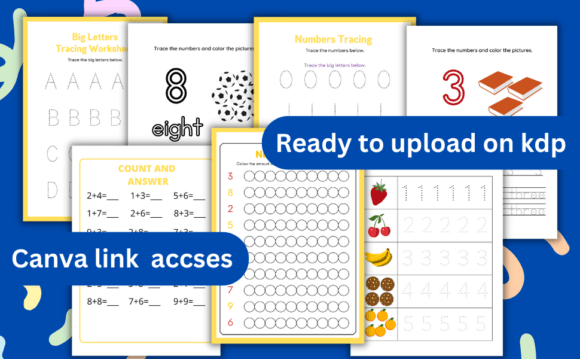
A professionally designed Tracing Letters and Numbers Workbook directly targets these developmental needs. By providing clear, consistent templates, it removes the uncertainty of "where to start." Each page in a quality workbook offers a guided path, typically starting with broken lines or dotted patterns that a child can follow. This method reduces the cognitive load of figuring out the shape, allowing the young learner to focus purely on the motor task. Repetition across the workbook reinforces pattern recognition and dexterity. Importantly, such a workbook transforms an abstract skill into a tangible, achievable task, providing a sense of accomplishment with every completed letter or number.
Practical Applications and Long-Term Outcomes
The practical use of a Tracing Letters and Numbers Workbook extends far beyond the simple act of tracing. Consistent practice leads to tangible outcomes. First, it dramatically improves fine motor skills, which are essential not only for writing but for tasks like buttoning clothes or using utensils. Second, it builds pre-literacy and pre-numeracy foundations. By repeatedly tracing "A" or "5," a child solidifies the connection between the symbol's name, its sound, or its quantity, and its physical form. This integrated learning is crucial for reading readiness and early math comprehension. Finally, the workbook fosters independence and focus. Children learn to engage with a task from start to finish, developing concentration habits that benefit all areas of learning.
Tailoring the Experience: How Different Users Benefit
The utility of a Tracing Letters and Numbers Workbook is versatile, serving different users in complementary ways.
For parents and homeschoolers, it provides a ready-made, structured curriculum element. There's no need to spend hours designing practice sheets; the workbook offers a complete, sequential system. It allows for flexible scheduling—practice can happen daily for short sessions or be integrated into broader themed activities, like tracing letters that start with the names of animals being studied.
For preschool and kindergarten teachers, it serves as a perfect classroom resource for centers, small group work, or individual practice. It ensures every student receives uniform, high-quality practice material, freeing up teacher time for one-on-one guidance. The workbook's pages can easily be incorporated into larger lesson plans about the alphabet or number sense.
For childcare providers and tutors, it offers a professional, focused tool to support specific skill development. It clearly demonstrates progress to parents and provides a tangible record of the child's work and improvement over time.
Key Features of an Effective Tracing Workbook
When selecting or recommending a Tracing Letters and Numbers Workbook, certain features indicate a product designed for both utility and quality. A comprehensive workbook should include both uppercase and lowercase versions of the entire alphabet (A-Z) and the full set of numbers from 0 to 9. The page dimensions should be standard, such as the American letter size of 8.5 x 11 inches, which is familiar and easy to handle for little hands and fits common printers and binders. The physical and digital quality is crucial: a resolution of 300 DPI ensures that the lines and characters are sharp and clear when printed, preventing blurry guides that could confuse a learner. Finally, the workbook should be provided as a print-ready PDF, offering maximum flexibility. Users can print the entire book as a bound workbook or select individual pages as needed for specific lessons or extra practice.
Implementation Tips for Maximum Benefit
To get the most value from a Tracing Letters and Numbers Workbook, consider these practical recommendations. Begin with a positive introduction; frame tracing as a fun "game" or a special "grown-up" skill. Start with simpler shapes, often capital letters and numbers like 1, 4, or 7, before moving to more complex lowercase letters with curves. Use proper tools—large, easy-grip pencils or crayons designed for young children make the physical task easier and more enjoyable. Celebrate progress, not perfection. Praise the effort and focus on improvements, like a smoother curve or a more confident line, rather than critiquing minor deviations. Integrate the tracing with other activities. After tracing the letter "B," point out "B" in a storybook or find objects that start with the "B" sound. This connects the motor skill to its real-world meaning.
A Resource Ready for Your Educational Journey
A well-crafted Tracing Letters and Numbers Workbook is a solution-focused resource that meets a clear, widespread need in early education. It translates the complex challenge of learning to write into a series of simple, achievable steps. By providing 100 ready-for-printing pages encompassing the full alphabet and number set in a high-resolution, standard format, it eliminates logistical hurdles for adults and creates an optimal learning environment for children. Whether you are a parent looking to supplement your child's learning at home, a teacher seeking reliable classroom materials, or a caregiver aiming to provide structured development activities, this workbook serves as a professional, approachable, and profoundly helpful tool. Its design prioritizes the user's need for quality and convenience, ensuring that the focus remains where it should be: on the joyful, foundational process of learning to write.