Master Your Time with the Perfect Daily Planner and Weekly Planner System
In our fast-paced world, the quest for organization is universal. Whether you're juggling a career, side projects, family, or personal goals, a reliable system to track your commitments is non-negotiable. This is where the synergy of a dedicated Daily Planner and a Weekly Planner comes into play. Unlike a scattered collection of notes or a single overwhelming calendar, this two-tiered approach offers clarity at both the micro and macro levels, allowing you to navigate each day with purpose while keeping the broader week in sight.
Many people are drawn to printable planner sets for their flexibility and cost-effectiveness. The promise of an instant download means you can start organizing immediately, without waiting for a physical product to arrive. However, the initial excitement of "getting organized" often leads to common, easily overlooked mistakes that can render even the best-designed pages ineffective. By understanding these pitfalls, you can ensure your new Daily Planner and Weekly Planner system actually works for you, rather than becoming another item on your to-do list.
The Oversized Ambition Trap
A frequent misstep is overloading your Daily Planner pages with every single task imaginable, from "call client" to "learn new language." This creates a visually overwhelming list that promotes burnout and procrastination. The daily sheet is for today's actionable priorities, not a lifetime bucket list. Similarly, filling your Weekly Planner with vague blocks like "work on project" provides no clear direction.
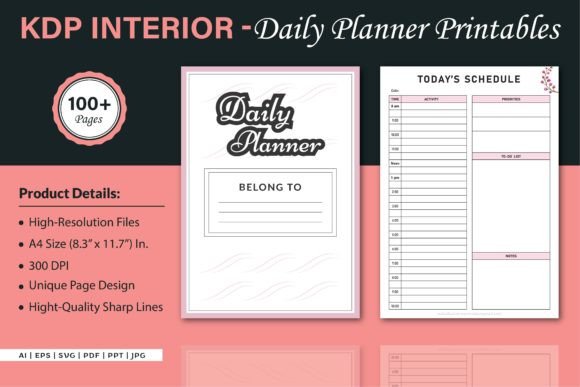
A better approach is to use the Weekly Planner for thematic mapping. Dedicate columns or days to broader categories like "Admin," "Creative Work," or "Fitness." Then, each morning, your Daily Planner becomes the execution document. Transfer only the specific, achievable tasks from the weekly themes onto your daily page. For example, your weekly plan might have "Fitness" for Thursday. Your daily entry for that day should then list "30-minute run at 7 AM" and "prepare post-workout smoothie," not just "exercise." This creates a manageable flow from intention to action.
Neglecting the Physical Print Settings
Since this is a printable system, the quality of your final product depends entirely on your printer and paper choices. A common misunderstanding is assuming any home printer will produce perfect results. Printing a dense, ink-friendly planner on low-quality paper with faint ink can make your pages difficult to read and unpleasant to use, undermining your motivation.
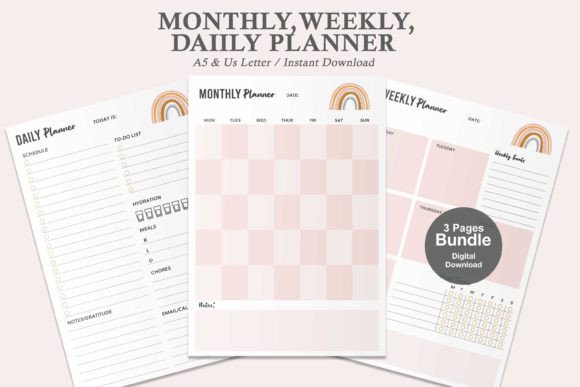
Before you print your entire Daily Planner and Weekly Planner bundle, run a test page. Check the contrast, ensure borders are clean, and verify that any checkboxes or lines are fully rendered. Invest in slightly heavier, smoother paper (even 24 lb. instead of 20 lb.) for a more professional feel that enhances the writing experience. Also, remember the bundle includes both US Letter and A5 sizes. Consider your portability needs: A5 is excellent for compact notebooks, while US Letter fits standard binders. Choosing the right size before bulk printing avoids wasted pages and frustration.
The Digital-Only Mindset Error
The product includes editable PDFs, which is a fantastic feature for pre-planning on a computer. However, a significant mistake is staying entirely digital. The power of a physical Daily Planner and Weekly Planner lies in the tactile act of writing, which enhances memory and commitment. Typing tasks into a PDF and never printing them often leads to those plans being forgotten amidst a sea of other digital files.
The ideal workflow leverages both. Use the editable PDF at the start of your week to draft your Weekly Planner structure digitally, perhaps when you're at your desk. Then, print that weekly overview. For your Daily Planner, commit to handwriting your daily tasks each morning with a pen you enjoy using. This ritualistic separation from screens can create a focused start to your day. The included JPEGs also offer flexibility; you can insert them into digital note-taking apps if you prefer a hybrid system, but ensure they still serve as dedicated, visual anchors for your time.
Ignoring the Monthly Planner’s Strategic Role
In a bundle that includes a Monthly Planner, it's easy to underutilize this component or use it incorrectly. Some treat it merely as a calendar for appointments, missing its strategic potential. The Monthly Planner should be the command center that informs your Weekly and Daily pages.
At the start of each month, use the Monthly Planner to mark not just events, but your primary goals and focus areas. For instance, if "Launch marketing campaign" is an April goal, block out the week it will happen. If your Habit Tracker or Fitness Planner goals are monthly (like "run 15 times"), note that target. This monthly context ensures your weekly and daily planning aligns with your larger objectives, preventing a disconnect where daily tasks feel busy but ultimately unproductive. Your Weekly Planner then breaks down these monthly blocks into actionable segments.
Failing to Integrate Specialized Trackers
The mention of a Habit Tracker and Fitness Planner within the bundle highlights a feature often used in isolation. People might use the Daily Planner for work tasks and the Fitness Planner for gym sessions, but keep them in separate binders or files. This fragmentation forces you to consult multiple sources, wasting time and reducing coherence.
Integrate these trackers directly into your Daily Planner and Weekly Planner routine. Your Daily Planner page should have a section or side-column where you quickly log today's completed habit or workout. Your Weekly Planner can have a summary row at the bottom to tally weekly progress. By binding or filing all these pages together, you create a unified life management system. Seeing your fitness goal checkmark next to your completed work project on the same weekly overview provides a powerful, holistic view of your progress.
Assuming One Design Fits All Forever
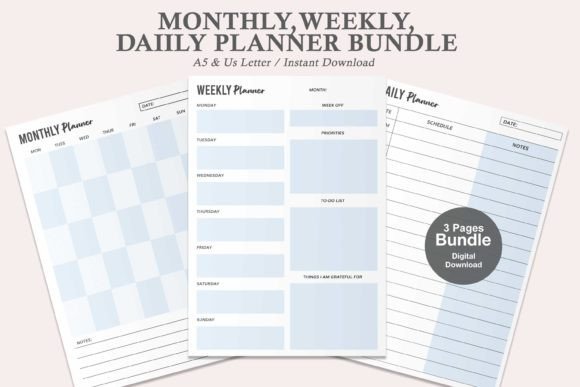
The bundle offers three versions—likely differing in layout, color, or detail level. A common oversight is sticking with the first design you print without evaluation. Your planning needs evolve. A minimalist design might be perfect for a busy professional season, but a more detailed version with sections for creative brainstorming might be better when launching a project.
Before you commit to printing dozens of pages, review all three PDF versions. Print a single page of each for your Daily, Weekly, and Monthly Planner. Use them for a day or week. Which layout naturally guides your eye? Which feels less cluttered? Does one have a notes section you find invaluable? The ability to switch designs is a core advantage of printable planners; it allows your system to adapt to your changing life phases without buying a new product.
Ultimately, the success of any Daily Planner and Weekly Planner system hinges on mindful setup and consistent, integrated use. By avoiding these common mistakes—from printing hastily to planning in silos—you transform a simple printable bundle into a robust framework for productivity and personal growth. The flexibility of an instant download means you control the medium; your thoughtful application determines its effectiveness. Start with a test print, integrate your pages, and let your days and weeks align towards the monthly goals you truly value.